
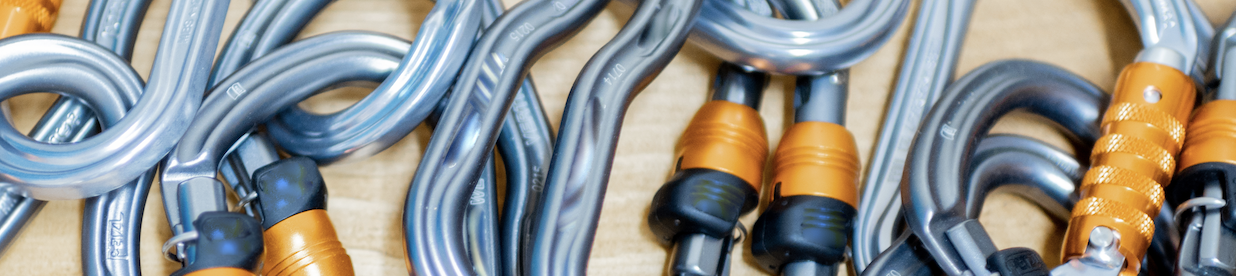
During a training course for your CWI or RCI qualification, you cover a great deal of ground - from coaching tips to personal climbing techniques, warm-ups to group management. You’ll also cover a fair amount of detail around the selection and use of PPE (harnesses, helmets, ropes and carabiners to name a few).
Once that’s all over, you have the consolidation period before your assessment, where you are expected to build on the knowledge learned at training, and progress your skills by climbing in a range of different venues.
But in all honesty, most candidates don’t invest any of that time considering the safe use of PPE, and gaining experience in carrying out pre-use checks of this essential safety equipment. It’s much more likely that they will spend time heading out to crags or walls and logging climbs, developing their personal climbing techniques, and maybe shadowing qualified instructors to pick up tips. This, instinctively, is what candidates feel they should focus on - getting that S4c pitch at the assessment crag climbed like a pro.
But PPE and equipment checks sit right at the heart of safe climbing instruction - and safe personal climbing, too!
Candidates for CWI and RCI are expected not only to use equipment correctly, but also to understand how to identify it as safe and suitable for use, check its condition, and know what to do with it if it’s unsafe.
The RCI syllabus, for example, requires that candidates can:
The RCI syllabus, for example, requires that candidates can:
Copyright © Learn the Ropes Ltd 2026
Created with